


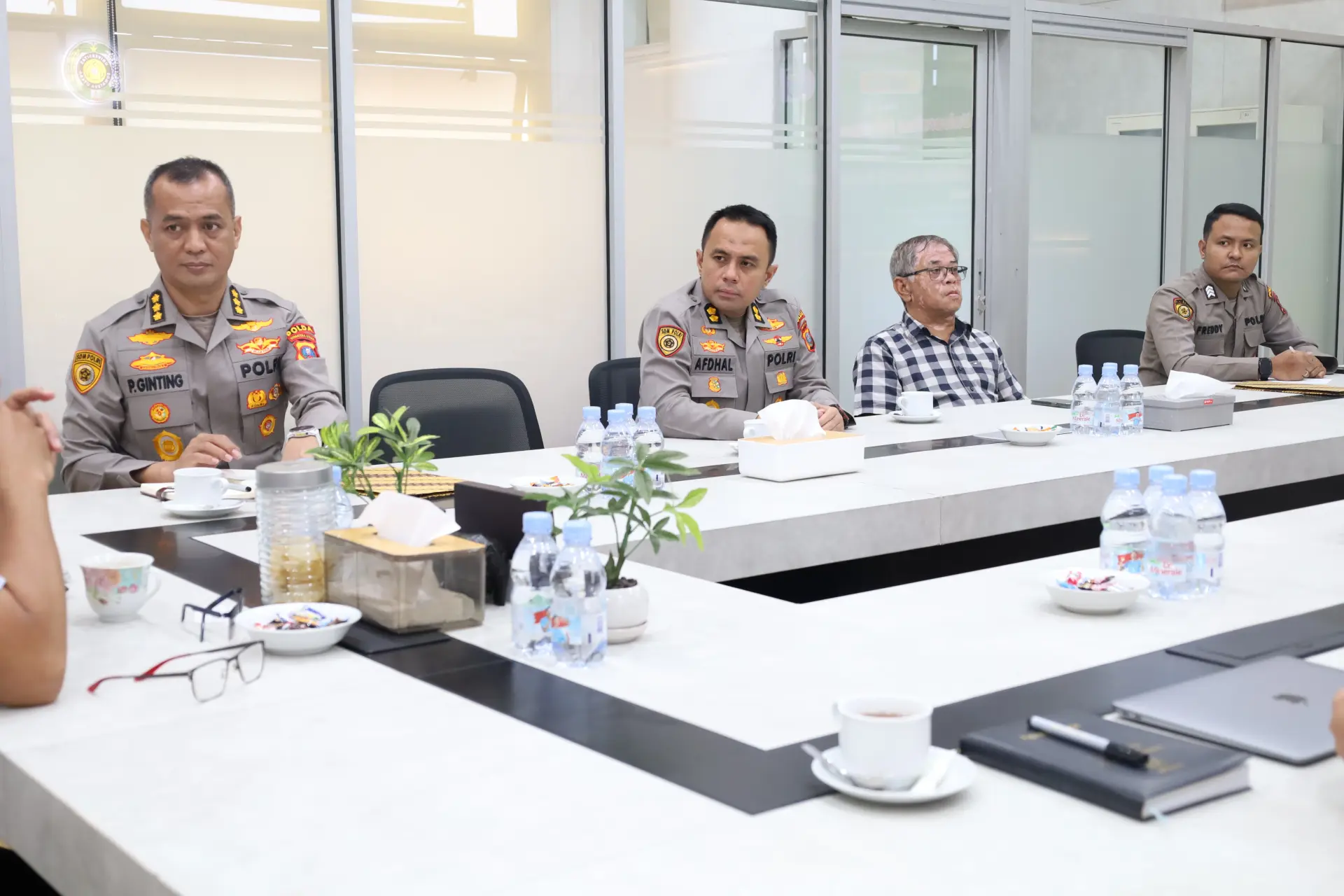
The audience was led by the Director of the Directorate of Internationalization and Global Partnerships of USU, Prof. Dr. Eng. Himsar Ambarita, S.T., M.T., and was attended by the Dean of the Faculty of Social and Political Sciences, Dr. Hatta Ridho, S.Sos., MSP; DIKG Cooperation Manager Prof. Dr. Arida Susilowati, S.Hut., M.Si.; Secretary of the Master’s Program in Notarial Studies Prof. Dr. Rosnidar Sembiring, S.H., M.Hum.; Prof. Ir. Nazaruddin, M.T., Ph.D.; as well as DIKG staff members.
During the meeting, both parties discussed the development of a Cooperation Agreement (PKS) that would not merely be administrative in nature but also implementative at the faculty and study program levels. One of the key points highlighted was the need to strengthen collaboration that supports curriculum development based on strategic issues and actual field needs.
In the discussion, it was conveyed that a draft of the Cooperation Agreement had been prepared as an initial step toward formalizing further collaboration. The planned cooperation also includes the establishment or strengthening of research centers relevant to the needs of the police institution, as well as the development of study programs that are adaptive to evolving social and legal dynamics.
Prof. Himsar Ambarita stated that USU can plan academic development through curriculum updates or the addition of new courses. However, such development requires coordination with the Directorate of Academic Development and other related units.
In addition, the audience meeting also discussed plans to establish special class programs that could support competency enhancement for personnel, while simultaneously opening opportunities for more specific academic collaboration. Further technical discussions will be conducted through a series of follow-up meetings to formulate a focused and systematic implementation mechanism.
The Secretary of the Master’s Program in Notarial Studies, Prof. Rosnidar Sembiring, emphasized that aligning the curriculum with strategic issues is a crucial step in maintaining the relevance of higher education. “The curriculum must always be updated based on emerging strategic issues, so that graduates possess contextual competencies and are responsive to the needs of institutions and society,” she stated.
The audience meeting also generated input suggesting that doctoral (PhD) alumni as well as alumni originating from police institutions should be actively involved in future cooperation development. Alumni involvement is considered capable of strengthening institutional networks while serving as a bridge of communication between academia and law enforcement institutions.